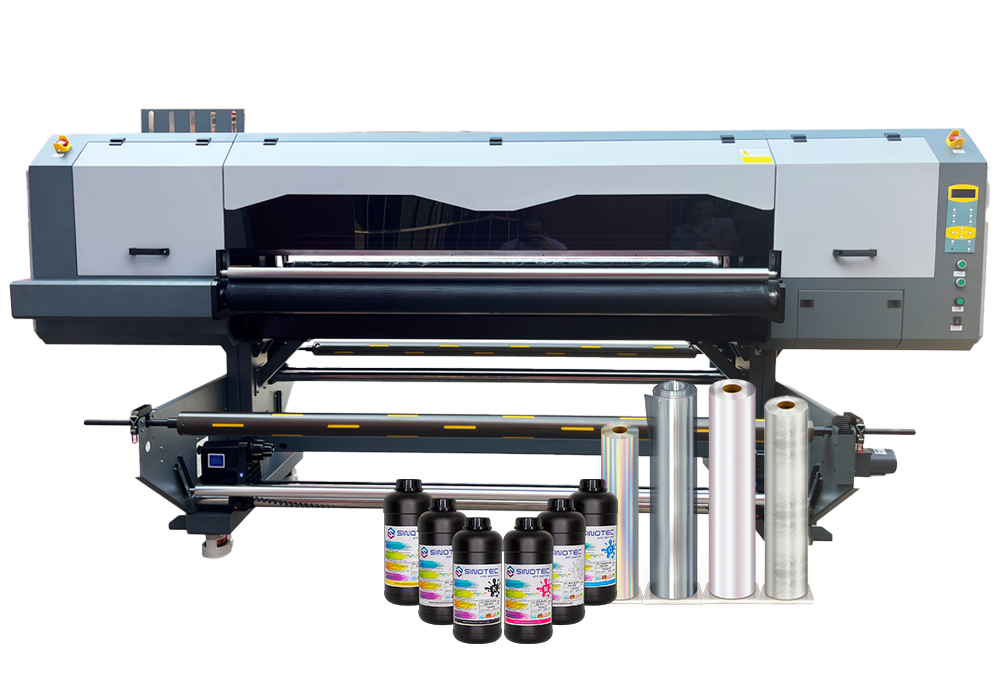
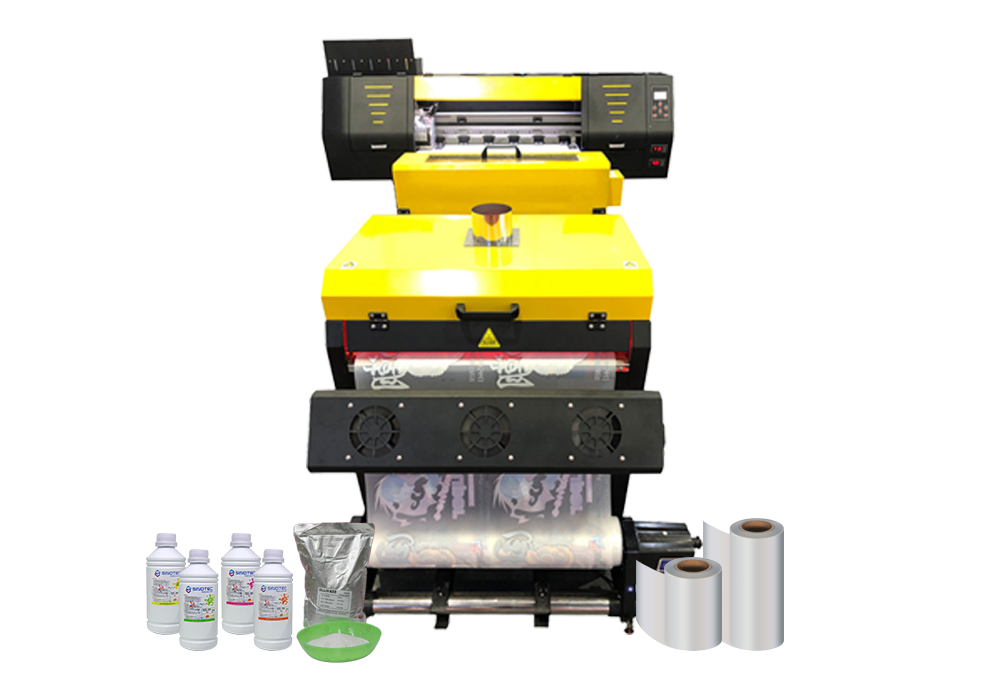
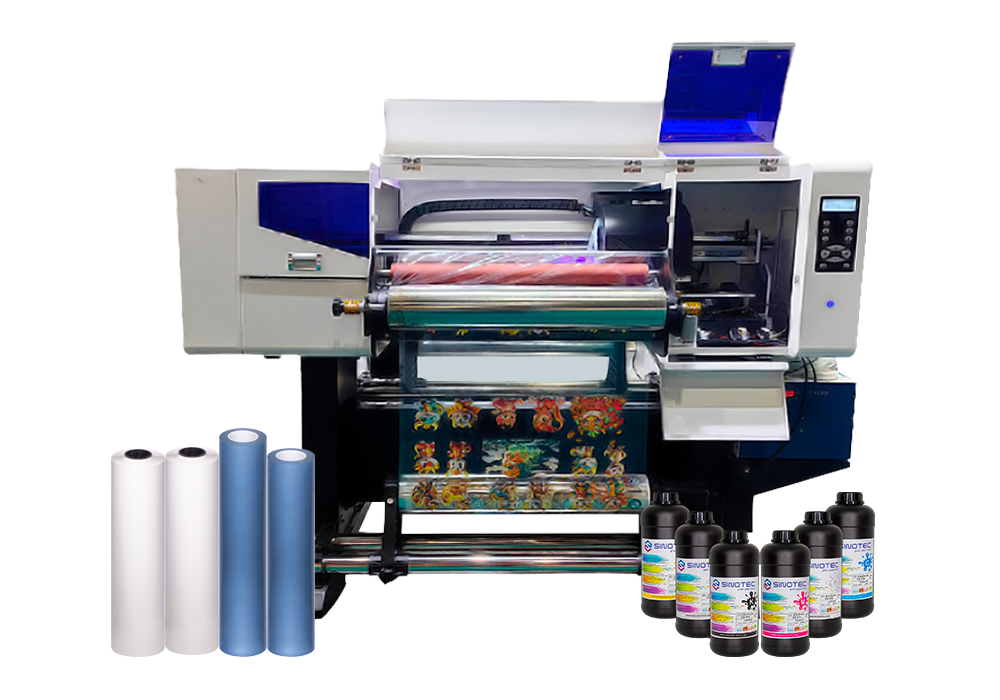
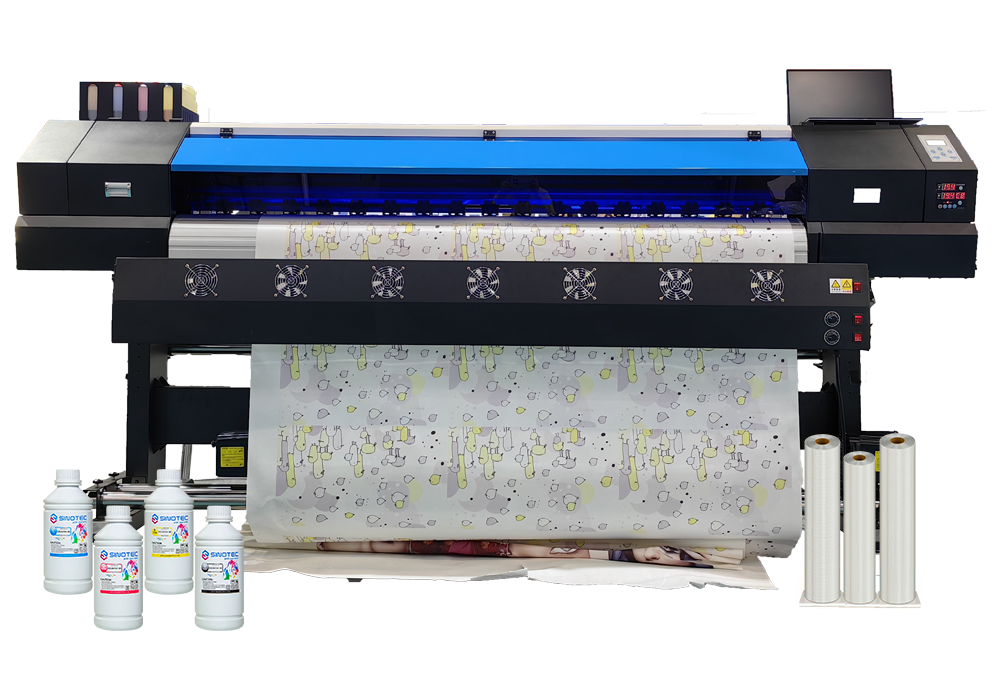



How Automatic DTF Printer Workflow Actually Works — Ink, Powder, Curing, and Take-Up in Sequence
The production sequence inside an automatic DTF printer is tightly choreographed — and understanding each stage is what separates buyers who get reliable throughput from those chasing warranty claims six months after installation.
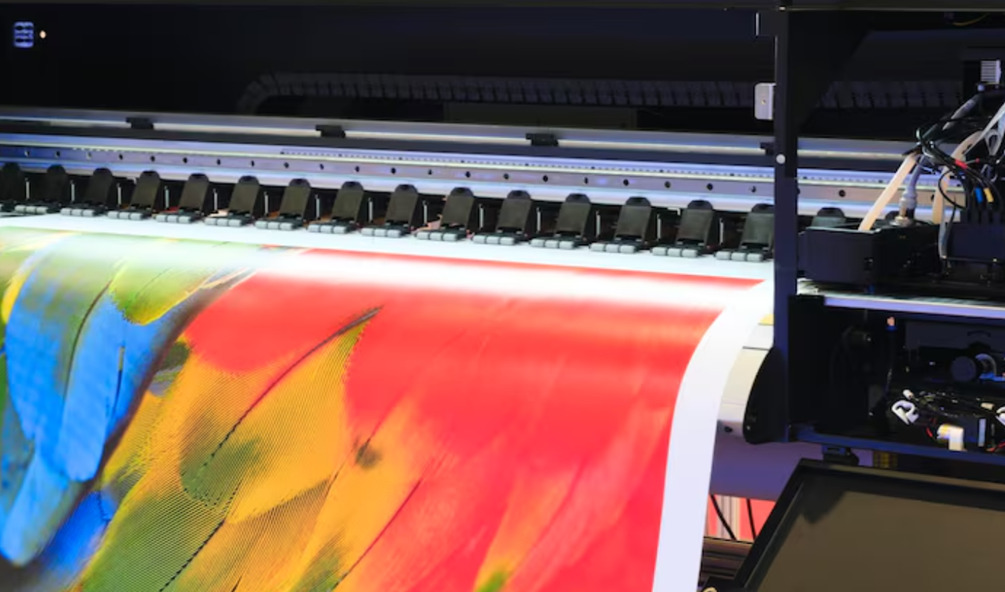
It starts with the print head depositing DTF Printer Ink directly onto a PET film substrate. The ink layering follows a precise order: white ink is typically laid down first as an underbase, then CMYK color layers are applied on top. This reverse-stack approach is what makes the final transfer opaque enough to read clearly on dark fabrics. Head height, ink viscosity, and film tension all have to be calibrated in sync — a misalignment at this stage creates banding or color drift that compounds through every unit produced.
From the print zone, the film advances automatically into a powder application station. Hot-melt adhesive powder is applied across the wet ink surface, and excess powder is recirculated rather than wasted — a detail worth confirming with any supplier, because powder waste adds up fast at commercial volumes. The bond between ink and powder at this stage determines wash durability downstream, so the application mechanism matters as much as the powder grade itself.
Curing follows immediately. The film passes through a controlled heat tunnel — temperatures and dwell times vary by machine design, but the goal is consistent melt and adhesion across the full print width without scorching the film or under-curing the edges. Uneven curing is one of the more common failure points on lower-spec units, and it’s rarely obvious until transfers start peeling after the first wash.
- Ink deposition onto DTF Film Printer substrate (white underbase, then CMYK)
- Adhesive powder application with recirculation of excess
- Heat curing through a calibrated tunnel
- Automatic take-up roll collection of finished film
The take-up roll at the output end collects finished film in continuous lengths, ready for either immediate heat-press application or roll storage. For procurement managers evaluating capacity, the take-up system’s roll diameter ceiling and tension control directly affect how long a machine can run unattended — which is where the “automatic” in automatic DTF printer actually earns its keep in a production environment.
Sourcing a DTF Film Printer With Synchronized Workflow: What Buyers Should Demand From Suppliers
Procurement decisions for an automatic DTF printer rarely fail on the hardware spec sheet — they fail on workflow integration. A machine that prints cleanly but uses incompatible adhesive powder, or requires DTF Printer Ink sourced exclusively from a single locked-in vendor, creates downstream cost exposure that no headline print speed can offset. Buyers evaluating suppliers need to push past the brochure and ask harder questions about end-to-end system coherence.
The first pressure point is ink-to-film compatibility. Not every DTF Film Printer substrate performs equally across ink formulations, and suppliers who manufacture or qualify both components carry a measurable advantage — they’ve already validated the pairing under production conditions. Ask for wash-fastness test data, not just color gamut specs. Peeling and cracking after laundering almost always traces back to a mismatch between ink chemistry and film coating, not to operator error.
Beyond materials compatibility, the supplier’s operational support structure deserves scrutiny. Relevant questions for any sourcing conversation:
- Does the supplier provide calibration profiles matched to their recommended DTF Printer Ink formulations, or does the buyer configure from scratch?
- What is the lead time on consumables — film rolls, adhesive powder, ink sets — and is there documented MOQ flexibility for buyers scaling production incrementally?
- Are firmware and RIP software updates included, or licensed separately?
- What certifications cover the machine’s electrical safety and ink compliance for the buyer’s target export market?
- Is remote diagnostics access available, and what’s the average response window for critical fault tickets?
Suppliers with genuine OEM and ODM capability — the kind that support custom configurations and validated consumable pairings — tend to offer more defensible long-term economics than those moving commodity hardware with no integration depth. SINOTEC’s positioning in the digital technology solutions space reflects exactly this model: export-oriented coordination with practical support for buyers who need specifications aligned to their production environment, not just a machine off a catalog page.
The synchronized workflow question ultimately comes down to accountability. When the ink, the film, and the automatic DTF printer are sourced from a supplier who stands behind the full system — not just individual components — troubleshooting has a single point of contact, and production continuity is a contractual expectation rather than a courtesy.
DTF Printer Ink Compatibility and Flow Rate: The Variables That Make or Break Automated Production
Ink performance in an automatic DTF printer is not simply a matter of color quality — it’s a systems engineering question. The viscosity of the DTF printer ink, its pigment suspension stability, and the flow rate calibration all interact directly with printhead behavior, and when any one of those variables drifts outside tolerance, the consequences compound fast: clogged nozzles, banding artifacts, inconsistent white ink opacity, and ultimately, wasted film and downtime.
White ink is the pressure point most procurement teams underestimate. Unlike CMYK channels, white ink contains heavier pigment particles that settle under static conditions. Automated machines address this through built-in circulation systems — but the effectiveness of those systems depends entirely on whether the ink’s rheological properties were matched to the circulation hardware at the design stage. Sourcing ink independently from the machine, purely on price, introduces a compatibility variable that no amount of printhead cleaning cycles can reliably correct.
Flow rate matters more than most spec sheets acknowledge. A DTF film printer running at high-volume throughput — say, continuous production across multiple shifts — demands ink delivery consistency that holds across temperature fluctuation and varying substrate speeds. Slight flow rate deviations that are invisible at low volume become visible failures at scale: thin coverage on white underbase layers, color gamut drift across a production batch, or premature wear on dampers and ink lines.
- Confirm that ink viscosity specifications are documented and matched to the specific printhead model installed
- Ask suppliers whether the ink circulation system was validated with the recommended ink formulation — not just generically tested
- Request data on white ink resuspension intervals and automated agitation cycles under continuous-run conditions
- Verify that ink channel configuration supports the production speed and print width your operation requires
Suppliers who control the ink-machine pairing — rather than treating consumables as a separate procurement decision — carry a meaningfully different risk profile for buyers. The compatibility question isn’t theoretical; it shows up in real production yield data. When a supplier can demonstrate validated ink-to-hardware pairings with documented flow parameters, that’s a qualification signal worth weighting heavily in any sourcing evaluation.
Evaluating Operational ROI and Throughput Efficiency Before Committing to an Automatic DTF Printer System
ROI on an automatic DTF printer system is rarely a single-line calculation. Procurement teams that reduce it to unit price versus output volume tend to miss the variables that actually determine whether the machine pays for itself — or becomes a recurring cost center. Throughput efficiency, in particular, deserves structured scrutiny before any purchase order is signed.
Start with the distinction between rated speed and production speed. Manufacturers publish print speeds under controlled, often ideal conditions. What matters operationally is the sustained output your facility can realistically achieve across a full shift — accounting for substrate handling, curing integration, ink replenishment cycles, and any downtime tied to DTF printer ink maintenance routines. A system that posts impressive speed figures but requires frequent manual intervention at the white ink stage will underperform against a slower-rated machine with more disciplined automation.
The DTF film printer component also deserves its own throughput audit. Film advance consistency, tension control across wide-format runs, and how the system handles roll transitions without operator input — these directly affect usable output per hour, not just theoretical print speed. Gaps here compound quickly across multi-shift operations.
- Request documented cycle time data for your specific print width and resolution targets — not the manufacturer’s showcase configuration
- Calculate cost-per-transfer at realistic production volumes, factoring ink consumption rates, film yield, and maintenance intervals
- Assess how the system handles partial runs and job changeovers — idle time between jobs erodes throughput efficiency more than most buyers account for
- Confirm whether the automation level — particularly in powder application and shaking — scales with your projected order volumes without bottlenecking downstream curing
Operational ROI also hinges on support infrastructure. Lead times on replacement components, remote diagnostic capability, and the supplier’s track record on parts availability all factor into the true cost of ownership. Suppliers with integrated production experience — those who have coordinated OEM and export-scale fulfillment — tend to carry more credible data on real-world machine performance than distributors working from specification sheets alone. That operational depth is worth probing directly during vendor qualification.
Conclusion
The buying decision really comes down to this: spec sheets don’t reveal how a machine behaves at job changeovers, and that’s exactly where throughput either holds or falls apart. An Automatic DTF Printer earns its cost when the automation is genuinely end-to-end — powder, shaking, curing — not just at the print head.
Don’t skip the support conversation. Parts lead times and remote diagnostics aren’t afterthoughts; they’re the difference between a two-hour fix and a two-week production halt.
Push your shortlisted vendors for real-world performance data at your actual run volumes. Suppliers with hands-on production and export fulfillment experience will have it. The ones working from spec sheets alone usually won’t.
Frequently Asked Questions
Q: What is an Automatic DTF Printer and how is it different from a manual setup?
UN: An Automatic DTF Printer handles the full transfer film workflow — printing, powder application, powder shaking, and curing — without an operator manually moving film between stations. Manual setups split those steps across separate machines or human handling, which slows throughput and introduces inconsistency at every handoff. The automation difference matters most at volume: a manual line that looks cheaper on paper often costs more in labor and rejects over a production month.
Q: How much does an Automatic DTF Printer typically cost?
UN: Entry-level commercial units generally start in the mid-thousands USD range, while high-throughput industrial configurations can run well into five figures depending on print width, automation depth, and ink system. The machine price is only part of the equation — factor in ink consumption, powder costs, and the support contract, because those recurring costs often exceed the hardware cost over a two-year window.
Q: What print width should I choose for an Automatic DTF Printer?
UN: Print width selection should follow your most common substrate size, not your largest occasional job. Running a wide-format machine at half capacity to print standard garment graphics wastes ink, slows curing uniformity, and increases powder waste on unused film edges. Most decorators producing apparel graphics at volume find that a 60cm roll width hits the sweet spot between flexibility and efficiency.
Q: How long does it take to produce a finished DTF transfer on an automatic machine?
UN: On a properly configured Automatic DTF Printer, the film moves continuously through print, powder, and cure stages — so finished, press-ready transfers typically exit the curing unit within a few minutes of the print head completing a pass. The real throughput variable isn’t the print speed listed in the spec sheet; it’s how cleanly the machine handles job changeovers and film loading without operator intervention.
Q: Why does powder adhesion quality vary between machines that seem identical on paper?
UN: The powder shaking and distribution mechanism is almost never standardized across manufacturers, even when print heads and ink systems look comparable. Uneven powder coverage — whether from inconsistent vibration frequency or airflow in the curing tunnel — shows up as weak adhesion spots after pressing, which only becomes obvious after washing. This is why requesting cured transfer samples (not just printed ones) from a vendor is non-negotiable before committing to an order.
Q: Can an Automatic DTF Printer handle specialty films like clear or matte finish transfers?
UN: Most automatic systems designed for roll-to-roll film processing can accommodate different film types, but curing temperature and conveyor speed often need adjustment per film specification — and not every machine makes those adjustments straightforward. Confirm with the supplier that the curing tunnel has independently adjustable temperature zones; single-zone systems tend to struggle with specialty films that have tighter heat tolerance windows.
Q: Is an Automatic DTF Printer worth the investment for small batch production?
UN: At low weekly volumes, the automation premium rarely pays back quickly — the machine sits idle long enough that a semi-auto or manual workflow often makes more financial sense. Where an Automatic DTF Printer earns its cost is in consistent quality across long runs and reduced labor dependency, both of which matter more as order volumes scale. A useful benchmark: if you’re consistently running more jobs than one operator can powder and cure without becoming the bottleneck, automation starts making economic sense.
Q: What maintenance tasks on an Automatic DTF Printer are most commonly overlooked?
UN: Powder buildup inside the shaking chamber and on conveyor belt surfaces is the maintenance item that catches most operators off guard — it accumulates gradually and then affects adhesion quality before anyone notices visually. Print head capping station cleaning and ink line purging schedules (which vary by ink type) are the other two areas where skipping a cycle eventually causes a costly repair rather than a quick fix. Ask your supplier for a documented maintenance interval sheet before installation, not after your first service call.