


How Dual Print Head Configuration Shapes i3200 DTF Printer Throughput and Shift Planning
Print head count is one of those spec-sheet details that procurement teams sometimes skim past — and it tends to bite them later when shift planning falls apart. For the i3200 dtf printer, the dual print head configuration is not a cosmetic upgrade. It directly determines how many square meters a production line can realistically output per hour, and that figure cascades into staffing decisions, order acceptance windows, and equipment ROI timelines.
Here is the core dynamic: two i3200 print heads working in tandem allow the machine to lay down white underbase ink and color simultaneously — or to split pass counts across both heads — rather than running sequential single-head passes. The practical result is a measurable reduction in print time per meter without a proportional increase in consumable waste. Buyers sourcing equipment for high-volume transfer production — think contract decorators running multi-shift operations — will feel this difference acutely when comparing quotes.
A useful reference point is the xp600 dtf printer, which remains common in entry-level and mid-volume configurations. The XP600 head operates at a lower native resolution ceiling and lower drop frequency than the i3200, meaning a single-head XP600 setup requires more passes to achieve comparable ink laydown density. Dual i3200 configurations pull further ahead not just in raw speed but in print consistency across longer runs — a factor that matters when a buyer is evaluating reject rates over a full production month, not just a demo print.
For shift planning purposes, procurement managers should request documented throughput figures at specific media widths — typically 60 cm — under production-realistic conditions, not best-case lab speeds. Dual-head i3200 dtf printer units from suppliers like SINOTEC, which coordinate OEM specifications and quality verification for international buyers, can be configured with matched head alignment tolerances that affect banding performance over extended shifts. This is the kind of operational detail worth confirming in writing before finalizing a purchase order.
- Verify throughput ratings at actual production width, not maximum media width
- Confirm head alignment calibration standards included in the OEM specification
- Request shift-length endurance data, not single-run speed figures
- Clarify whether dual-head configuration affects warranty terms or servicing intervals
i3200 vs XP600 DTF Printer: Comparing Head Architecture for Commercial Production Capacity
Head architecture is where the i3200 and XP600 diverge most sharply — and for procurement managers evaluating commercial DTF capacity, this is the comparison that actually determines production ceiling, not just print quality.
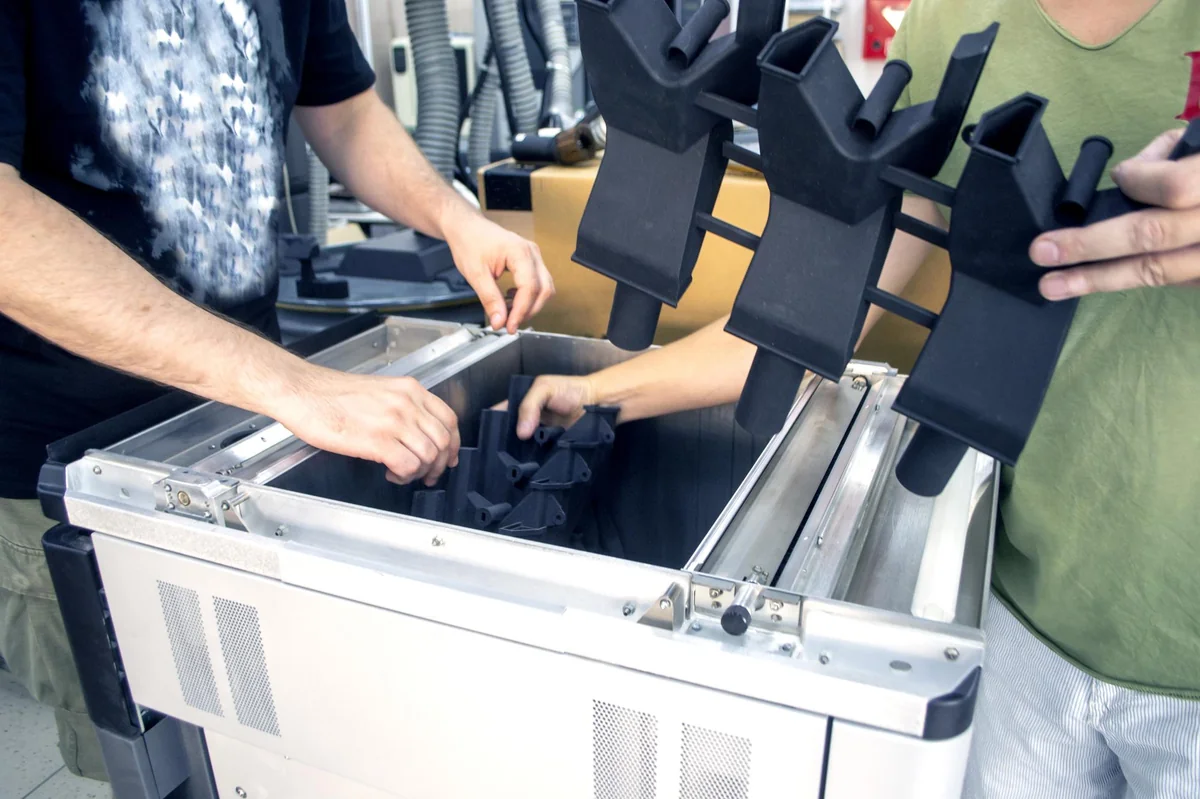
The XP600 printhead operates on a piezoelectric system originally designed for wide-format signage, running at lower native resolution with fewer nozzle rows. It performs adequately in short-run environments or entry-level DTF setups. But the xp600 dtf printer configuration carries a structural limitation: nozzle count per head is significantly lower than the i3200, which means achieving comparable output requires either slower pass speeds or additional print passes — both of which compress hourly throughput in a sustained production shift.
The i3200 dtf printer uses Epson’s i3200-A1 head, which delivers higher native resolution and a substantially denser nozzle arrangement. That density matters in two ways. Primero, it allows fewer passes to achieve equivalent ink coverage — meaning faster effective throughput at comparable quality. Segundo, the higher nozzle count creates redundancy: if a small cluster of nozzles degrades over time, the head continues performing within acceptable tolerances rather than producing visible banding immediately. For commercial buyers running multi-shift operations, that built-in tolerance is a meaningful operational buffer.
| Attribute | i3200 Head | XP600 Head |
|---|---|---|
| Nozzle count | Higher — denser nozzle array | Lower — fewer nozzle rows |
| Native resolution | Up to 2400 dpi | Up to 1440 dpi |
| Pass efficiency | Fewer passes for full coverage | More passes required at equivalent quality |
| Degradation tolerance | Higher redundancy buffer | Lower — visible dropout earlier |
| Typical deployment | Commercial, high-volume production | Entry-level, short-run setups |
Suppliers coordinating OEM configurations — SINOTEC handles this kind of specification verification for international buyers — can document head model, nozzle pitch, and calibration tolerances in writing before a purchase order is placed. That documentation matters when comparing quotes across suppliers, because two machines described identically on a spec sheet can behave very differently in a 10-hour production run depending on how the head array was sourced and aligned.
Powder Shaker Cycle Timing and Its Direct Impact on i3200 DTF Printer Output Per Shift
Powder application and curing is where a significant share of shift-level output actually gets determined — and it’s the variable most procurement teams underestimate when evaluating an i3200 dtf printer configuration. The print head defines resolution and speed potential, but the powder shaker unit governs whether that potential converts into finished, press-ready transfers at the rate the spec sheet implies.
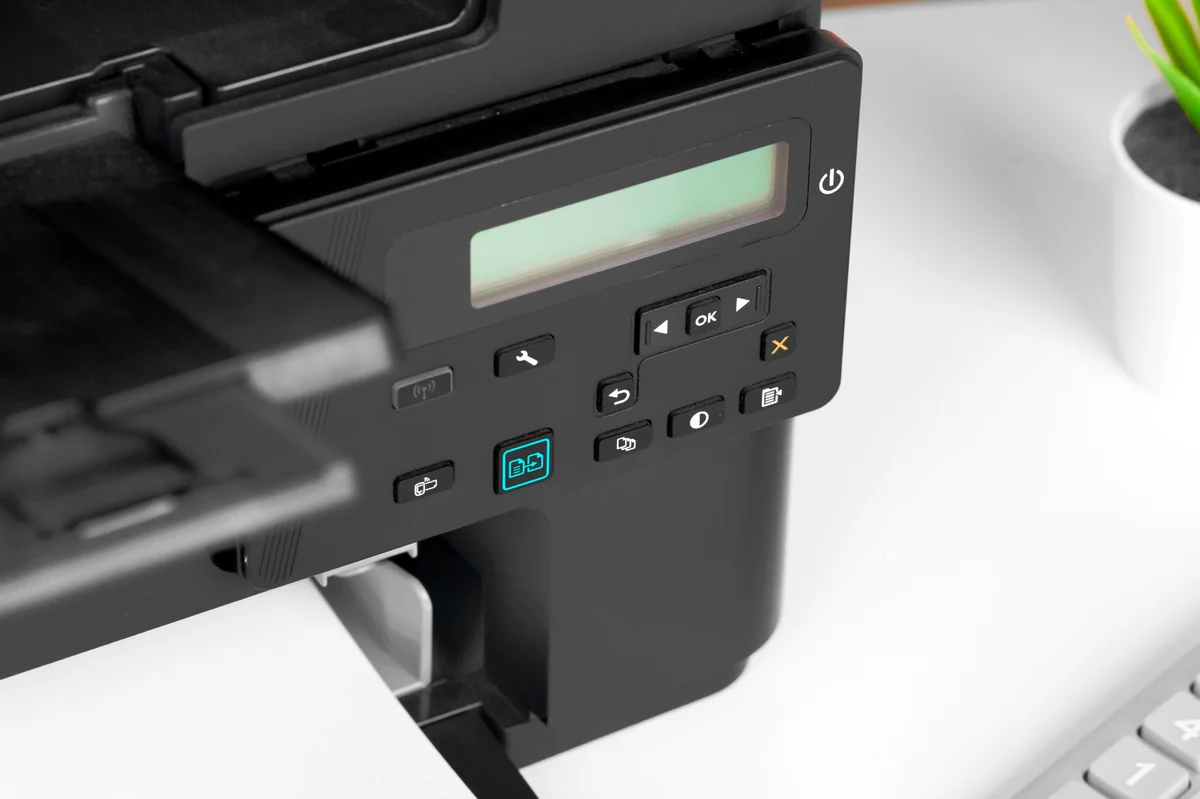
Cycle timing on the shaker refers to how long the unit takes to apply adhesive powder, remove excess, and pass the film through the curing tunnel — from the moment a printed sheet exits the platen to the moment a cooled, finished transfer is stacked and ready. On a well-matched system, this cycle runs in close synchronization with the print head’s output rate. When it doesn’t, you get a bottleneck that no amount of printhead speed compensates for.
The practical consequence: a production line running an i3200 dtf printer at rated throughput but paired with an undersized or poorly timed shaker unit will queue film between stations. That queue introduces inconsistency — ink that sits too long before powder application can produce adhesion defects, while film that moves too fast through an underpowered curing tunnel risks incomplete melt. Neither outcome is recoverable without reprinting.
Buyers comparing i3200 configurations against entry-level alternatives — including the xp600 dtf printer, which operates at lower throughput and is often paired with more compact shaker units — should treat the shaker cycle spec as a matched-system variable, not an accessory. The relevant questions when reviewing supplier configurations:
- What is the rated curing tunnel temperature range, and at what film speed?
- Does the shaker unit’s cycle time match the printer’s maximum output rate at the target resolution?
- Is the powder removal mechanism mechanical, vibrational, or air-assisted — and how does that affect fine-detail transfers?
- Can the shaker unit be independently speed-adjusted without stopping the print run?
Suppliers able to provide matched-system documentation — rather than quoting printer and shaker as separate line items with separate specs — give procurement teams a cleaner basis for comparing operational ROI across quotes. That systems-level view is what separates a production-grade configuration from a collection of individually adequate components.
Sourcing an i3200 DTF Printer: What Procurement Teams Should Verify Before Committing to a Supplier
Supplier verification for an i3200 dtf printer purchase is not a formality — it’s where procurement decisions either hold up under production pressure or quietly unravel six months post-delivery. The technical specs may look identical across three different quotes, but the operational reality behind each one can vary considerably.
Start with documentation. A credible supplier should be able to provide CE, FCC, or RoHS certification relevant to the destination market — not just a certificate scan on request, but traceable documentation with issuing body details. If a supplier hesitates or offers generic compliance language, that’s a signal worth taking seriously.
Then there’s the question of printhead sourcing. The Epson i3200 is a genuine OEM component, and the difference between a printer built with authentic printheads versus lower-grade alternatives often doesn’t show up in the spec sheet. Ask directly: can the supplier provide printhead provenance documentation? Some suppliers serving international buyers — including export-focused manufacturers like SINOTEC — treat this as standard pre-sales disclosure rather than a special request.
Lead time commitments deserve scrutiny too. Standard lead times quoted at inquiry stage frequently expand once an order is placed. Get written confirmation of production lead time, sea freight transit estimates, and what buffer the supplier builds in for quality inspection before dispatch. A mismatch between quoted and actual lead times creates downstream problems for print shop launch schedules.
- Request matched system documentation — printer, shaker, and curing unit — not separate component specs
- Confirm MOQ thresholds and whether pilot orders are available before volume commitment
- Ask whether the supplier supports OEM/ODM configuration if branded or custom-spec units are needed
- Verify post-sale technical support coverage: time zones, response SLA, and parts availability
- Clarify whether the unit ships as a configured system or requires on-site calibration by a technician
One useful comparison point: buyers already familiar with the xp600 dtf printer format will notice that i3200-based systems typically involve more configuration complexity at setup — which makes supplier-side technical support capability a more consequential factor, not a secondary one. Procurement teams that treat support terms as an afterthought tend to learn that lesson at the worst possible time.
Conclusión
The i3200 dtf printer is a serious production tool — and it deserves serious procurement habits to match. Configuration complexity, system integration, and post-sale support aren’t fine-print concerns; they’re the difference between a machine that earns its keep and one that sits idle waiting on parts or answers.
Get the full system documentation. Confirm support terms before you commit to volume.
Suppliers who can’t answer those questions clearly upfront won’t suddenly get better once the unit is on your floor.
Preguntas frecuentes
q: What is an i3200 dtf printer and how does it differ from standard inkjet printers?
A: An i3200 dtf printer uses a direct-to-film process — ink is deposited onto a PET film, coated with hot-melt adhesive powder, cured, and then heat-pressed onto fabric — which is a fundamentally different workflow from desktop inkjet printing. The i3200 printhead itself is an industrial-grade piezoelectric head designed for high-speed, high-resolution output with aggressive ink throughput that consumer inkjet heads simply aren’t built to handle. That industrial architecture is why setup and calibration require more than just plugging the machine in.
q: How much does an i3200 dtf printer typically cost?
A: Entry-level configurations start in a range that most small shops find accessible, but mid-range and wide-format i3200 dtf printer setups — once you factor in the full system (RIP software, curing unit, powder shaker) — can land significantly higher. The printhead alone carries a meaningful replacement cost, so total cost of ownership matters more than the upfront unit price. Get a full system quote, not just a hardware figure.
q: How long does an i3200 printhead last before it needs replacing?
A: Lifespan varies considerably depending on ink quality, maintenance discipline, and print volume — but under consistent production conditions with proper daily flushing and storage routines, printheads typically remain viable for a meaningful production window. Neglect the maintenance schedule even briefly, and that window shortens fast. Suppliers who stock replacement heads locally (or can ship them quickly) are worth prioritizing for exactly this reason.
q: Why does ink type matter so much for an i3200 dtf printer?
A: The i3200 printhead operates within specific viscosity and surface tension tolerances — use ink that falls outside those parameters and you’re looking at clogging, banding, or head damage that voids most warranties. DTF ink also needs to bond correctly with the hot-melt powder during the curing stage; incompatible formulations produce transfers that crack or peel after washing. This isn’t a place to cut corners with off-brand substitutes.
q: Can an i3200 dtf printer handle white ink without constant maintenance issues?
A: White ink is the most demanding channel in any DTF setup — it’s denser, settles faster, and clogs more aggressively than CMYK inks. Most i3200 dtf printer configurations address this with white ink circulation systems or automatic stirring mechanisms, but those systems need to actually be running and properly configured. Operators who skip the daily purge cycle on white ink channels tend to discover the consequences at the worst possible moment.
q: Is an i3200 dtf printer worth it for small or mid-size print businesses?
A: For shops running consistent, repeatable orders — custom apparel, artículos promocionales, sportswear — the i3200 dtf printer delivers a production-per-hour output that makes the economics work at moderate volumes. The break-even point depends heavily on your order mix and whether you’re replacing screen printing, DTG, or manual transfer workflows. Where it doesn’t make sense: low-volume, highly variable runs where setup time erodes the throughput advantage.
q: How do I choose between single-head and dual-head i3200 dtf printer configurations?
A: Single-head setups are a reasonable starting point for shops still scaling up, but dual-head configurations effectively double your output without proportionally doubling your footprint or operator overhead — which is why production-focused buyers almost always move toward dual-head once volume justifies it. The decision really comes down to your current order backlog and where you expect to be in 12 a 18 months, not just where you are today. Suppliers like SINOTEC that handle OEM and custom configurations can usually spec this out against your actual production targets.
q: What RIP software works with an i3200 dtf printer?
A: Several professional RIP platforms support i3200-based DTF systems, and compatibility depends partly on your printer’s control board and the supplier’s software bundle — so confirm this before purchase, not after. The RIP handles color profiles, ink limits, and white underbase generation, which means a poorly configured RIP produces mediocre output regardless of how good the printhead is. Ask for a test print run with your actual artwork files before committing to any system.